Showing posts with label mobile computing. Show all posts

Sunday, June 26, 2011

Project Abstract - Cell Breathing Techniques For Load Balancing In Wireless Lans

Maximizing network throughput while providing fairness is one of the key challenges in wireless LANs (WLANs). This goal is typically achieved when the load of access points (APs) is balanced. Recent studies on operational WLANs, however, have shown that AP load is often substantially uneven. To alleviate such imbalance of load, several load balancing schemes have been proposed. These schemes commonly require proprietary software or hardware at the user side for controlling the user-AP association. In this paper we present a new load balancing technique by controlling the size of WLAN cells (i.e., AP’s coverage range), which is conceptually similar to cell breathing in cellular networks.


The proposed scheme does not require any modification to the users neither the IEEE 802.11 standard. It only requires the ability of dynamically changing the transmission power of the AP beacon messages. We develop a set of polynomial time algorithms that find the optimal beacon power settings which minimize the load of the most congested AP. We also consider the problem of network-wide min-max load balancing. Simulation results show that the performance of the proposed method is comparable with or superior to the best existing association-based methods.

Project Abstract - Greedy Routing With Anti-Void Traversal For Wireless Sensor Networks

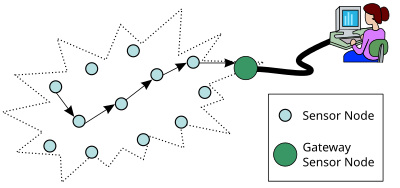
The unreachability problem (i.e., the so-called void problem) that exists in the greedy routing algorithms has been studied for the wireless sensor networks. Some of the current research work cannot fully resolve the void problem, while there exist other schemes that can guarantee the delivery of packets with the excessive consumption of control overheads. In this paper, a greedy antivoid routing (GAR) protocol is proposed to solve the void problem with increased routing efficiency by exploiting the boundary finding technique for the unit disk graph (UDG). The proposed rolling-ball UDG boundary traversal (RUT) is employed to completely guarantee the delivery of packets from the source to the destination node under the UDG network. The boundary map (BM) and the indirect map searching (IMS) scheme are proposed as efficient algorithms for the realization of the RUT technique.


Moreover, the hop count reduction (HCR) scheme is utilized as a short-cutting technique to reduce the routing hops by listening to the neighbor’s traffic, while the intersection navigation (IN) mechanism is proposed to obtain the best rolling direction for boundary traversal with the adoption of shortest path criterion. In order to maintain the network requirement of the proposed RUT scheme under the non-UDG networks, the partial UDG construction (PUC) mechanism is proposed to transform the non-UDG into UDG setting for a portion of nodes that facilitate boundary traversal. These three schemes are incorporated within the GAR protocol to further enhance the routing performance with reduced communication overhead. The proofs of correctness for the GAR scheme are also given in this paper. Comparing with the existing localized routing algorithms, the simulation results show that the proposed GAR-based protocols can provide better routing efficiency.


Project Abstract - Route Stability In Manets Under The Random Direction Mobility Model

A fundamental issue arising in mobile ad hoc networks (MANETs) is the selection of the optimal path between any two nodes. A method that has been advocated to improve routing efficiency is to select the most stable path so as to reduce the latency and the overhead due to route reconstruction.


In this work, we study both the availability and the duration probability of a routing path that is subject to link failures caused by node mobility. In particular, we focus on the case where the network nodes move according to the Random Direction model, and we derive both exact and approximate (but simple) expressions of these probabilities. Through our results, we study the problem of selecting an optimal route in terms of path availability. Finally, we propose an approach to improve the efficiency of reactive routing protocols.

Presentation on the topic mobile ad hoc networks

Tabu Search Algorithm For Cluster Building In Wireless Sensor Networks – Project Abtracts

The main challenge in wireless sensor network deployment pertains to optimizing energy consumption when collecting data from sensor nodes. This paper proposes a new centralized clustering method for a data collection mechanism in wireless sensor networks, which is based on network energy maps and Quality-of-Service (QoS) requirements. The clustering problem is modeled as a hypergraph partitioning and its resolution is based on a tabu search heuristic.


Our approach defines moves using largest size cliques in a feasibility cluster graph. Compared to other methods (CPLEX-based method, distributed method, simulated annealing-based method), the results show that our tabu search-based approach returns high-quality solutions in terms of cluster cost and execution time. As a result, this approach is suitable for handling network extensibility in a satisfactory manner.